La Mancha Soul
Extra virgin olive oil — La Mancha Soul
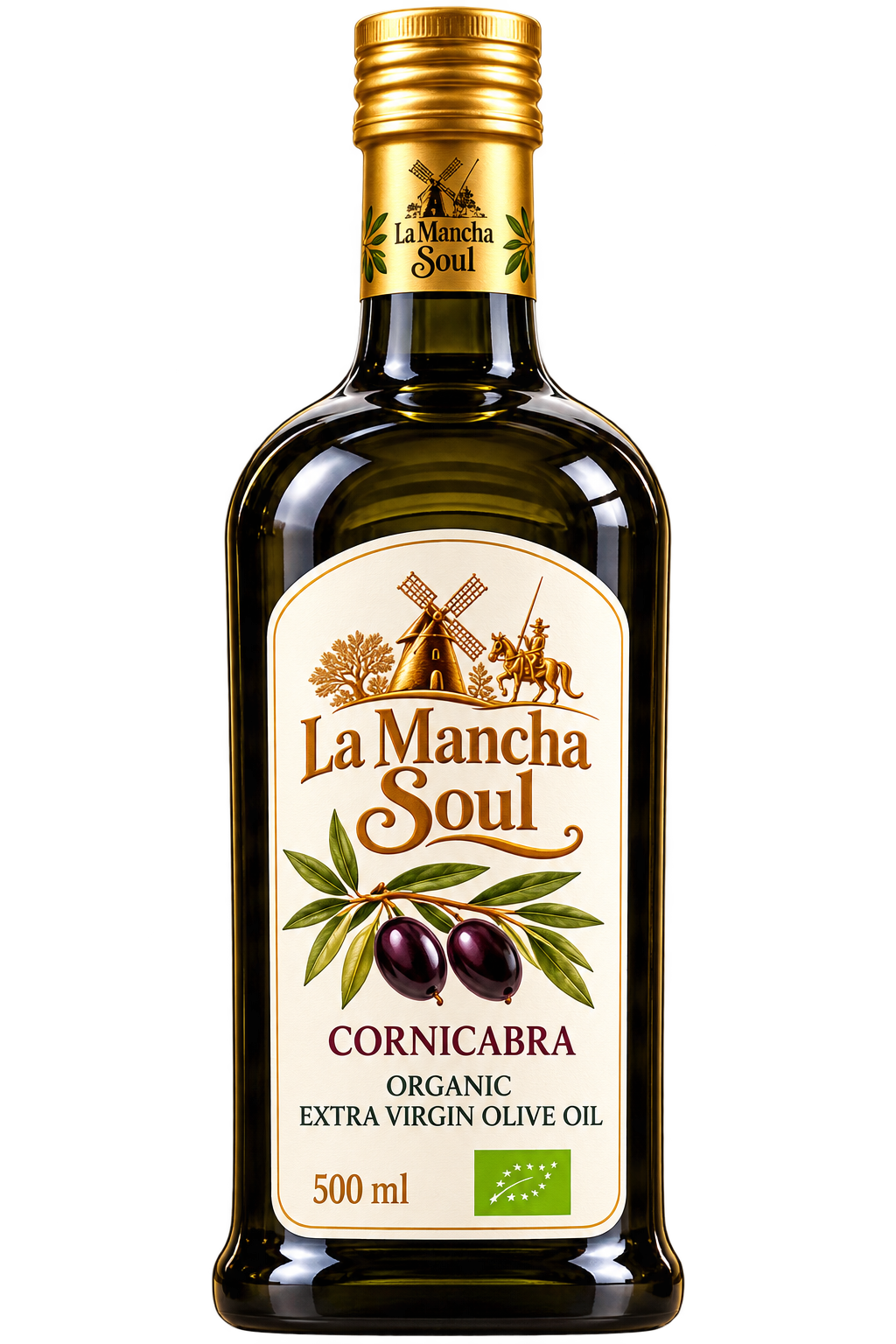
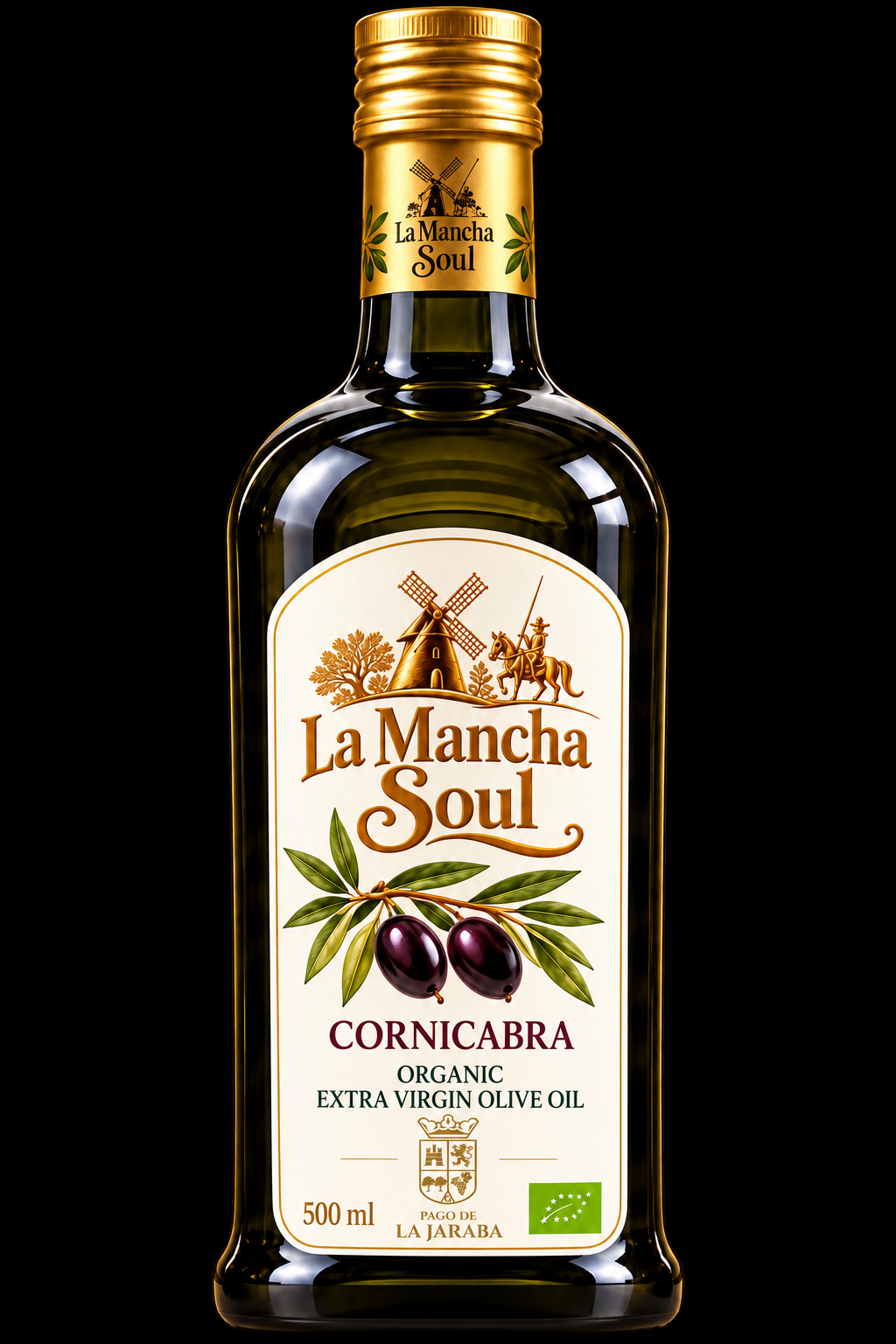
Brand visual under private review. It does not establish certification, composition or availability.

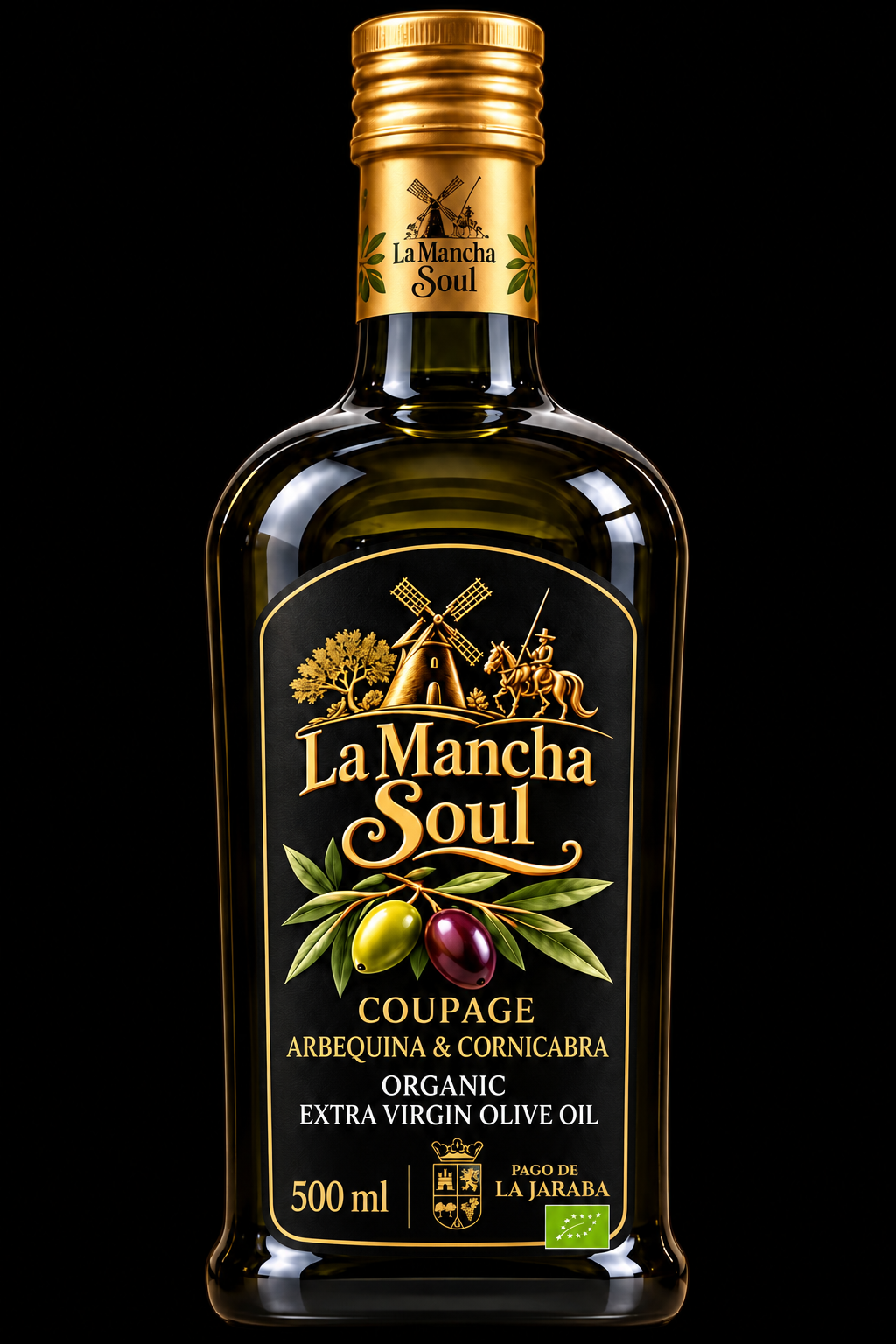
EXTRA VIRGIN OLIVE OIL · CORNICABRA AND ARBEQUINA

La Mancha Soul · Extra virgin olive oil

Two profiles. A choice that starts on the plate.

Cornicabra and Arbequina allow a conversation about extra virgin olive oil that goes beyond intense or mild. One offers a direct connection to the olive-growing culture of Castilla-La Mancha; the other opens a path towards greater sensory delicacy. La Mancha Soul proposes choosing by variety, production, storage and use, with the specific product reference as the common ground.

Extra virgin olive oil

In a hotel, breakfast, the table and a welcome gift say something about the place. This extra virgin olive oil brings guests the landscape of La Mancha, the memory of its olive groves and the care of a land that Don Quixote made known around the world. The product sheet, format, harvest and batch help the buying team choose a product with a story, not just another bottle.

Extra virgin olive oilAI-generated visual.

Cornicabra: structure and roots in La Mancha.

Cornicabra is a variety traditionally associated with Castilla-La Mancha. As a varietal tendency, it can offer a structured profile, medium-to-high fruitiness, bitterness and pungency. That character invites trials where the oil plays a noticeable role: a finish over pulses, tomatoes, strongly flavoured vegetables or a meat preparation. Ripeness, harvest season and production all shape this profile: varietal guidance must be checked against the chosen product reference. A useful choice means tasting the product on the food that will actually be served and deciding how prominent a role it should play. The territorial connection provides meaning; the trial on the plate determines the culinary fit.

Explore the Cornicabra profile
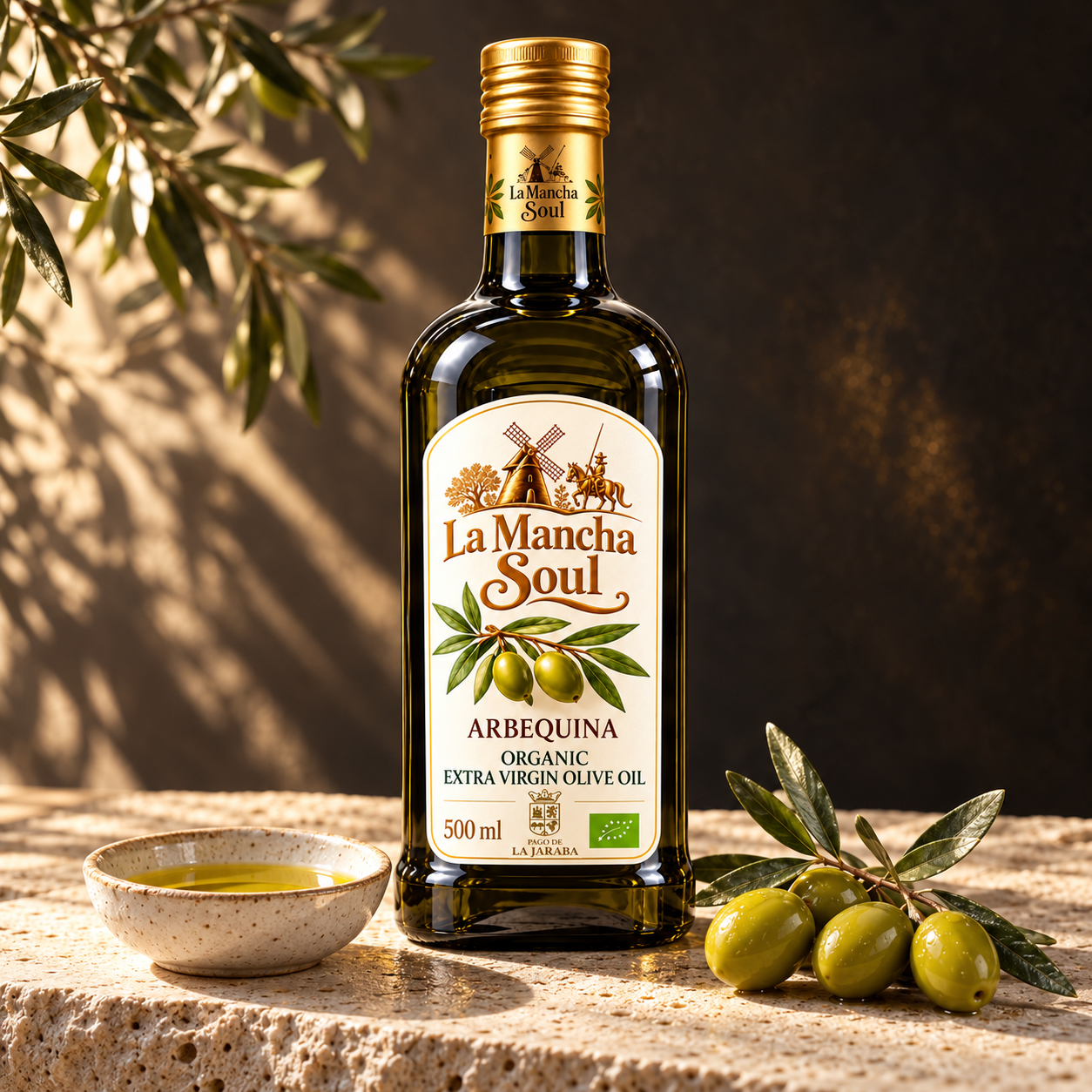
Arbequina: delicacy does not mean lower quality.

Arbequina generally has a milder, more delicate profile, with moderate or light bitterness and pungency. It offers guidance for those seeking an oil that complements a preparation without dominating it. Breakfasts, fish, mayonnaise, light preparations and pastry provide settings to test that balance. Perceived mildness and quality are different matters; harvest season and production give each product reference its own profile. A comparative tasting is therefore more useful than ranking winners and losers: it lets you choose the role of the oil. It can be an accessible introduction for a front-of-house team or a deliberate choice by a chef when the main ingredient calls for more discreet support.

Explore the Arbequina profile

The time between harvest and extraction matters.

Quality begins with the fruit. Its condition, ripeness and handling determine what reaches the mill. After harvest, prolonged waits in poor conditions, heat or damage to the fruit can encourage deterioration and fermentation. Prompt processing helps protect its potential but does not automatically make an oil extra virgin. A technical conversation should be able to cover reception, cleaning, milling, malaxation and separation. During malaxation, small oil droplets come together to facilitate extraction; time, temperature and exposure to oxygen influence the result. Understanding this chain lets you ask about an actual process rather than buy an appealing expression with no verifiable substance.

Understand the production criteria

Extra virgin is a category; bitter and pungent are not inherently defects.

Virgin oils are obtained through mechanical processes or other physical means under conditions that do not alter the oil. The extra virgin category requires compliance with physicochemical and sensory criteria: a low acidity figure is not enough. Free acidity is a laboratory measurement, not a sensation of sourness. In sensory assessment, fruitiness, bitterness and pungency are positive attributes; rancid notes or other defects are a different matter. A buyer may prefer less pungency without that invalidating a well-balanced product reference. Separating personal taste, intensity and classification helps make recommendations more precise and avoids using ‘mild’ or ‘strong’ as synonyms for good or bad.

Discuss a comparative tasting

Stability: caring for the oil’s profile.

Research cited in the guides frequently places Cornicabra among varieties with high oxidative stability. Its fatty acid profile and phenolic compounds may contribute to that resistance to deterioration. Arbequina tends to show lower stability in some comparisons. These are varietal tendencies that help frame purchasing and handling questions; ripeness, irrigation, harvest season and processing change the composition. In practice, this information should be considered alongside the rate of consumption and storage conditions. An oil used to finish dishes front of house and another used for everyday kitchen work may follow different paths. Choosing the format and planning when containers are opened are part of protecting the profile assessed in the tasting.

Review the product reference’s technical information

Quality continues beyond the mill.

Light, heat and oxygen can damage an oil after extraction. Suitable tanks, storage conditions and protective packaging are part of caring for the product, as much as production decisions. For kitchen and front of house, choose a format consistent with the rate of use, keep the container closed between services and avoid unnecessary exposure to heat and light. In distribution, the same approach extends to warehouses and transport. Care continues throughout use, even with protective packaging and stable varieties. Presentation is assessed by how it protects and serves the product reference, not just how it looks in a photograph or on the shelf.

Ask about format and storage

Analysis, tasting and certification: the product reference dossier.

The extra virgin category requires physicochemical and sensory criteria. Free acidity, peroxide value and ultraviolet absorbance provide information different from tasting; acidity is a laboratory measurement, not a sour taste. Each result relates to its own batch. Oxidative stability describes the oil, not a reduction in oxidative stress in the body. Nor do varietal tendencies determine the polyphenol content, shelf life or flavour of each batch. Documentation must identify the product reference, variety, declared origin and batch. Organic and DOP status are communicated only with a current certificate covering the final product, not on the strength of a photograph, proximity to an olive grove or another of the producer’s lines. Primary analyses and certified coverage for this selection are missing. General descriptions of production do not establish cold extraction, specific timings or ownership of facilities. Format, availability and supply are defined for each project.

Request the available documentation

Choose the oil for its role, not a universal hierarchy.

A simple trial can compare Cornicabra and Arbequina on the same preparation and then across two different uses. This reveals whether structure, delicacy or a finish that contributes to the dish’s identity is desired. Pairing guidance is not law: the batch and recipe decide. For a table, a pastry workshop or a commercial range, the proposal is defined through the desired profile, format, storage conditions and product reference documentation. Understanding that choice allows a selection with a clear function to be built. Two well-explained varieties offer a useful starting point for chefs, front-of-house teams and buyers who want to give oil a recognisable role.

Choose a profile for my project

Tell us where you want the oil to make its presence felt.

A finishing touch to a dish, breakfast service, pastry or a commercial selection: the use changes the recommendation. Tell us where you want oil to take a leading role, and let us begin by comparing profiles on that preparation.

Discuss my extra virgin olive oil selection

Literature · Don Quijote and the region

But this matters little to our tale: it is enough that, in telling it, we stray not one jot from the truth.

Miguel de Cervantes Saavedra · Don Quijote de la Mancha
Part 1 · Chapter 1
Read the passage in its source ↗

Translation provided for reading; the original text is available in the cited source.

Literary reference; it does not establish the product's origin, quality or commercial terms.

Availability, formats, prices, MOQ, lead time, certifications, documentation and batch data are confirmed for each product reference, market and transaction.

A product for every occasion

The same product. A different decision.

Do you need it for the table, kitchen, retail or gift presentation?

Kitchen: deciding whether the oil supports or speaks up.

In a professional kitchen, comparing Cornicabra and Arbequina on the same dish allows a more precise decision than choosing by the oil’s colour. Cornicabra generally brings structure, bitterness and pungency; Arbequina points towards a more delicate profile. These are tendencies to start a trial, not compulsory recipes. Suggest a finish over pulses or vegetables and a lighter preparation: the contrast helps establish the desired culinary role. Then review the product reference, its storage requirements and the right format for service, without confusing sensory intensity with an automatic quality classification.

Discuss a kitchen comparison
Hotels: a clear choice from breakfast to dinner.

In hotels, oil can serve different purposes at breakfast, front of house and in the kitchen. Arbequina offers a more delicate direction for light preparations; Cornicabra can be explored when a more pronounced finish is wanted. A team tasting helps explain the difference without presenting one variety as superior to the other. To define the proposal, consider the pace of service, formats and protection from light and heat. The information sheet provided to staff must describe the actual product reference, not assign it an acidity or certification taken from another product.

Review the hotel’s oil service
Supermarkets: two varieties, two clear reasons to choose.

In supermarkets, Cornicabra and Arbequina allow a choice customers can understand: a more structured profile and a more delicate one, subject to tasting the product reference. Supporting information can explain that bitterness and pungency do not automatically mean a defect, and that extra virgin status is not determined by acidity alone. When preparing the range, review the label, storage requirements, batch identification and applicable documents. If an organic option is included, it must be supported by its own certificate; it is not communicated as a characteristic of the entire range.

Explore an extra virgin olive oil range
Airports: take home a variety, not just a beautiful bottle.

In airports and travel retail, the proposal can focus the souvenir of La Mancha on the identity of Cornicabra and offer Arbequina as a more delicate alternative. A short explanation of variety and use gives travellers a culinary reason to choose. The operator must review format, protection, labelling and conditions of sale and transport before introducing the product reference; compatibility with every type of luggage or destination is not guaranteed. The cultural reading accompanies the oil, while the product information explains what the bottle contains and how to care for it.

Assess extra virgin olive oil for travel retail
Resorts: different profiles for experiences that need not repeat themselves.

In resorts, a single selection can be considered for several dining venues without imposing the same oil on every recipe. Cornicabra invites trials of a more structured presence; Arbequina, a more delicate accompaniment. The proposal can include a tasting for kitchen and front-of-house teams, followed by a choice based on use. Operations matter as much as the story: formats matched to consumption, protected containers and storage away from heat and light. No shelf life is promised by variety; the product reference and the conditions it will encounter within the resort are reviewed.

Review profiles for my resort
Pastry: choosing the oil the recipe really needs.

In pastry, Arbequina is a useful starting point when seeking a delicate profile that does not dominate the whole. Cornicabra can be considered if the pastry workshop wants a more pronounced presence, but the decision must come from testing, not the varietal name. Compare a familiar recipe, record the oil used and assess texture and sensory results without promising automatic substitutions between fats. The next step is to specify the preparation and review the available product reference. This way, the selection responds to the pastry chef’s work, not a pairing rule presented as universal.

Explore a pastry application
Gifting: sharing a way to choose and savour.

For culinary gifting, Cornicabra and Arbequina offer two different conversations: a connection with Castilla-La Mancha and structure, or delicacy and accompaniment. The proposal can focus on one variety or offer a comparison, depending on the agreed formats. A usage and storage card is more useful than a list of superlatives. A reading from Don Quijote can accompany the experience as culture, never as an endorsement of the oil. Before defining the set, review the actual product references and their information, without turning the gift into a promise of certification or exclusivity.

Discuss an extra virgin olive oil gift
Importers: comparing profiles and protecting quality along the way.

For importers, the varietal name is the start of the assessment, not the complete dossier. Cornicabra and Arbequina must be reviewed alongside the available product sheet, analysis and sensory assessment, batch identification, packaging and storage requirements. Varietal stability does not eliminate the risks of light, heat or oxygen during distribution and transport. If the market requires organic or DOP status, documentation must cover the specific product reference. Let us start with destination, use and desired profile to define a useful review, without assuming the existence of formats, certifications or commercial terms not yet agreed.

Request an extra virgin olive oil review for import

Select your channel to see what information to prepare and the appropriate next step. You do not need to download the full catalogue.

Samples from one box per line. Units, price, availability and transport to be confirmed.

La Mancha Soul · private packaging review

Images of Extra virgin olive oil

The images do not confirm final packaging or a final commercial product reference.

Brand visual under private review. It does not establish certification, composition or availability.

Extra virgin olive oil — La Mancha Soul

Let's talk about what you need.

Tell us what you'd like to add to your range. We'll send the information you need to decide: a product sheet, sample, catalogue or proposal.

Products of interest