La Mancha Soul
Honey — La Mancha Soul
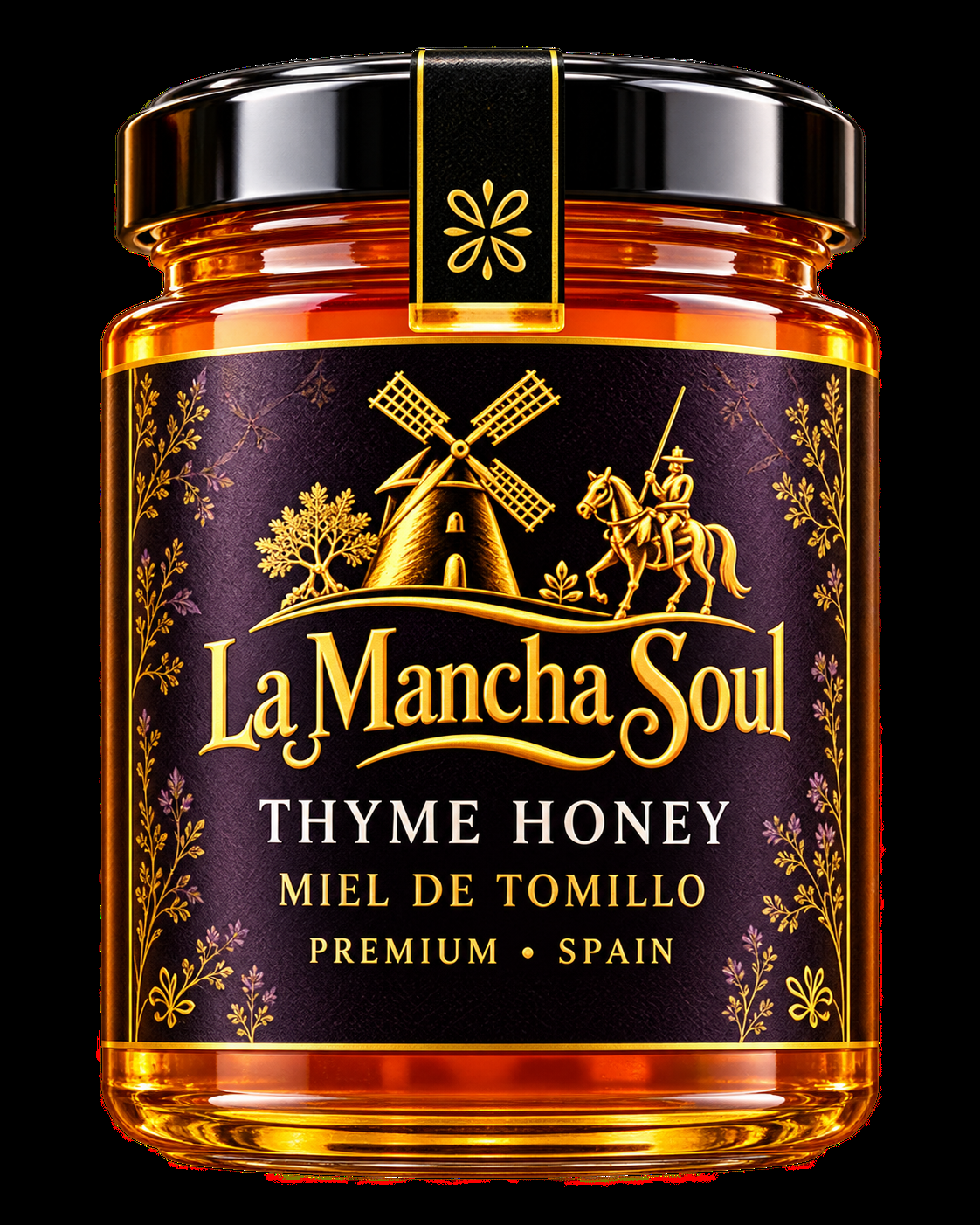
Packaging visual under review. It does not establish floral source, certification or availability.

HONEY · AROMA · TEXTURE · TABLE

La Mancha Soul · Honey

Honey goes beyond sweetness.

A breakfast, a cheese board or a dessert may call for different honeys. The choice begins with aroma, texture and intensity, and continues with the origin that can be documented. La Mancha Soul proposes discussing honey through the service you envisage, without turning a flower into a promise for every jar.

The flower helps reveal another way to choose.

Botanical origin helps explain why honeys do not all taste or look the same. Rosemary, spike lavender and multifloral are different designations in the beekeeping documentation consulted. They offer a starting point for exploring aromas and considering the presence you want honey to have at the table. The choice can begin with a simple tasting and continue on bread, cheese or the planned preparation. Observe what changes between tasting it alone and combining it: the recipe as a whole determines how prominent it should be. For a commercial proposal, that conversation lets you describe what you are seeking before choosing the product reference. The floral identity of the supply is verified alongside its other information in the documentation section.
Delicacy and presence are not a quality classification.

As tasting guidance, the botanical specification consulted describes rosemary as having a low-intensity, floral aroma with notes of fresh beeswax. For spike lavender, it describes a more intense and persistent lavender-floral presence. These are reference profiles from that document, not tasting notes assigned to a La Mancha Soul jar. In multifloral honeys, the botanical combination invites assessment of the whole rather than a search for a single leading flower. There is no reason to turn that diversity into a lower category. Taste the aroma, perceived sweetness, possible contrasts and persistence. Then decide whether you want to accompany a delicate preparation or introduce a more noticeable presence. Preference depends on the table, not a universal ranking.

Crystallisation changes texture; it does not tell the whole story.

Honey may be fluid, viscous or partially or fully crystallised. Crystallisation is part of its behaviour. For buyers, what matters is knowing the texture they will receive and how it fits the intended service. Honey spread on bread is assessed differently from honey portioned over a dessert. Observe ease of use, the perceptible size of the crystals and the result in the preparation. If you want a particular presentation, state this before choosing.

From a spoonful to the balance of the dish.

At the table, try honey with bread, cheese or a simple breakfast to hear its voice before surrounding it with other flavours. In the kitchen, you can explore a vinaigrette, a sauce or a sweet-and-savoury finish. These are culinary suggestions to be adapted to the product reference and your recipe, not a performance guarantee. Start with a measured quantity and record the result. Changing the honey can change what you perceive in the whole, even at the same dose. The useful question is not how much it sweetens in the abstract, but what it brings to that preparation. If the ingredient plays a prominent role, taste it separately too, and explain its identity only as far as the documentation allows.

A pastry recipe deserves its own trial.

For pastry, define whether honey will work within the preparation or as a finish. Incorporating it into a dough is not the same decision as serving it over a finished item. Before changing a familiar formulation, record quantity, process and result, without automatically transferring the proportions of another sweetener. For breakfast and food service, also review how it is portioned, who replenishes it and how much product is opened each shift. Presentation should support service, not force improvisation. The best proposal connects the experience of the person tasting it with the routine of the person serving it.

Caring for aroma also means caring about handling.

Follow the instructions on the pack and avoid unnecessary exposure to heat. Technical honey documentation distinguishes composition, processing and storage; excessive heating can harm its quality. We therefore do not equate a liquid texture with greater freshness or treat heat as an aesthetic solution without consequences. During service, use clean, dry utensils, keep the container properly closed when not in use and avoid introducing water or remnants of other preparations. Retain the batch information and organise rotation according to the stated dates. If a change raises doubts, ask before serving; an explanation of crystallisation must not be used to justify every alteration.

A clear identity for every table.

Honey can be chosen to accompany a delicate preparation or to make its presence more noticeable in the whole. Express that intention in service terms: desired aroma, texture when portioning and role in the recipe. This gives kitchen, purchasing and front-of-house teams a shared, specific reason for the choice. If the project requires organic honey or a particular provenance, include those requirements in the first conversation. They will be considered alongside presentation and intended use, keeping floral origin, geographical origin and organic status separate. Documentary coverage for each designation is brought together below. The aim is for useful information to accompany the honey from selection through to its explanation at the table.

Origin, quality and certification of the product reference.

Documentation identifies the product, declared origin, batch, presentation, storage and shelf life. Floral, geographical, organic and DOP designations have different scopes: they require specific support and cannot be inferred from the landscape, producer or another honey. The rosemary and spike lavender profiles described here come from a reference botanical specification; they are not tasting notes or confirmed La Mancha Soul variants. Floral identification requires compatible characteristics, not a picture of flowers. Moisture, HMF, diastase activity and authenticity address different technical questions. Mentioning them does not establish that results are available; primary reports and certification applicable to the supply are missing. Crystallisation alone proves neither purity nor defect, and an always-liquid texture is not guaranteed. A sample guides tasting without replacing controls. Presentations and availability are explored by project; this sheet makes no health claims.

Tell us at which table you want to serve it.

Breakfast, kitchen, pastry workshop or gifting: tell us at which table you want to serve the honey and what role you would like it to play. Aroma, texture and presentation will be the starting point.

Ask about honey for my channel

Literature · Don Quijote and the region

He drew near to the inn, which to him seemed a castle, and a short way from it reined in Rocinante, expecting some dwarf to appear between the battlements and sound a trumpet to announce that a knight was arriving at the castle.

Miguel de Cervantes Saavedra · Don Quijote de la Mancha
Part 1 · Chapter 2
Read the passage in its source ↗

Translation provided for reading; the original text is available in the cited source.

Literary reference; it does not establish the product's origin, quality or commercial terms.

Availability, formats, prices, MOQ, lead time, certifications, documentation and batch data are confirmed for each product reference, market and transaction.

A product for every occasion

The same product. A different decision.

Will it be used for breakfast, in the kitchen, in a shop or as a welcome gift?

A spoonful changes the balance.

For the kitchen, choose a preparation before choosing a story about flowers. Test the honey in a vinaigrette, a sauce or a finish, and record dose and result. If you need a discreet aroma or a stronger presence, express it as a tasting criterion, not an already guaranteed floral source. Texture also determines how you will work during service. That trial lets you compare product references by their contribution to the dish, then request the information relevant to the supply under consideration.

Explore a kitchen application
Breakfast deserves more than sweetness.

Honey can bring a conversation about aroma and texture to a hotel breakfast without requiring a lengthy explanation to guests. Before choosing a presentation, observe how it is served: attended table service, buffet station or individual request. Review portioning, utensils, replenishment and product identification. Do not advertise a floral source or organic status based on the room's decoration. A trial during an actual shift helps decide which format to enquire about and what information the front-of-house team needs.

Prepare a breakfast proposal
A clear label is worth more than a generic landscape.

For supermarkets, separate product designation, declared origin and organic status. None can be inferred from the honey's colour or the flowers on the pack. Assess a product reference with its label and documentation, and prepare a simple explanation of texture and crystallisation that does not promise purity at a glance. The selection must be understandable on the shelf without transferring attributes from another honey. Weight, presentation and storage requirements are reviewed before defining the proposal, without assuming stock turnover or permanent availability.

Review honey for the shelf
A gift for the table also has travel conditions.

Honey can be proposed as a souvenir to open at home, but a travel retail proposal must first examine packaging, closure, protection and operator requirements. We do not assume that any jar can travel under any circumstances. At the point of sale, explain use and texture clearly, without promising an unsubstantiated floral origin. Presentation can evoke a breakfast scene or a shared table; commercial and transport conditions are confirmed for the specific project.

Ask about honey for travel retail
From buffet to attended table service, without improvisation.

At a resort, honey can feature at breakfast, in the kitchen and in dining service, but each venue needs its own handling approach. Before centralising purchasing, identify which presentation is opened, who replenishes it and which texture makes each service easier. A tasting with the teams allows selection by use and avoids repeating an unsupported floral designation on every menu. The proposal must follow the product's actual route, from receipt to table, without turning a presentation idea into a confirmed format.

Define the honey services
Do not change the honey without testing the recipe.

In the pastry workshop, honey used to finish an item is not assessed in the same way as honey incorporated into the preparation. Define the ingredient's role and record dose, process and result before replacing a regular product reference. Aroma, perceived sweetness and texture are tested in your formula, not inferred from a photograph. If you need a specific floral source, its identification is reviewed separately. The aim is a reproducible choice for that preparation, without promising automatic equivalence with sugar or other sweeteners.

Ask about honey for the pastry workshop
A shared table can fit into a small gift.

For gifting, honey can suggest a leisurely breakfast or a cheese board without invoking health benefits. First choose the experience you want to offer, then the product reference, its presentation and protection for the set. A card can offer usage ideas and explain texture, always with information applicable to the product. We do not add a floral, organic or geographical designation simply because it embellishes the story. The gift-box proposal and any personalisation are explored according to actual feasibility.

Discuss a honey gift
The designation must travel with its evidence.

To import honey, start with the product, destination country and commercial use. Review declared origin, floral designation where applicable, batch, label, presentation and storage conditions. Quality parameters and authenticity controls must address the requirements of that transaction, not a generic list. Organic status and designation of origin are considered separately and only with applicable documentation. A sample can guide sensory choice; it does not replace the dossier or allow results from another batch to be transferred to the supply.

Scope an import assessment

Select your channel to see what information to prepare and the appropriate next step. You do not need to download the full catalogue.

Samples from one box per line. Units, price, availability and transport to be confirmed.

La Mancha Soul · private packaging review

Images of Honey

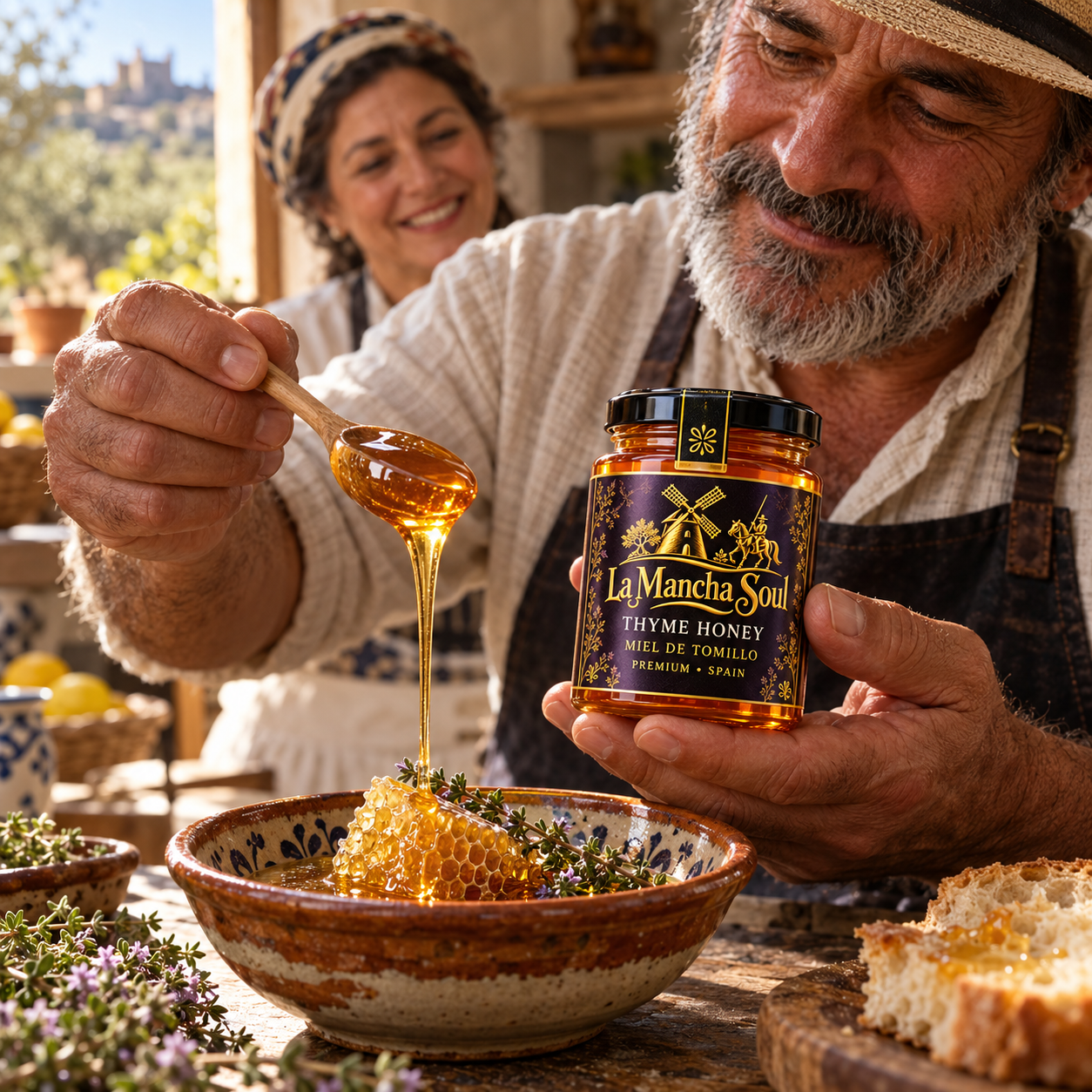
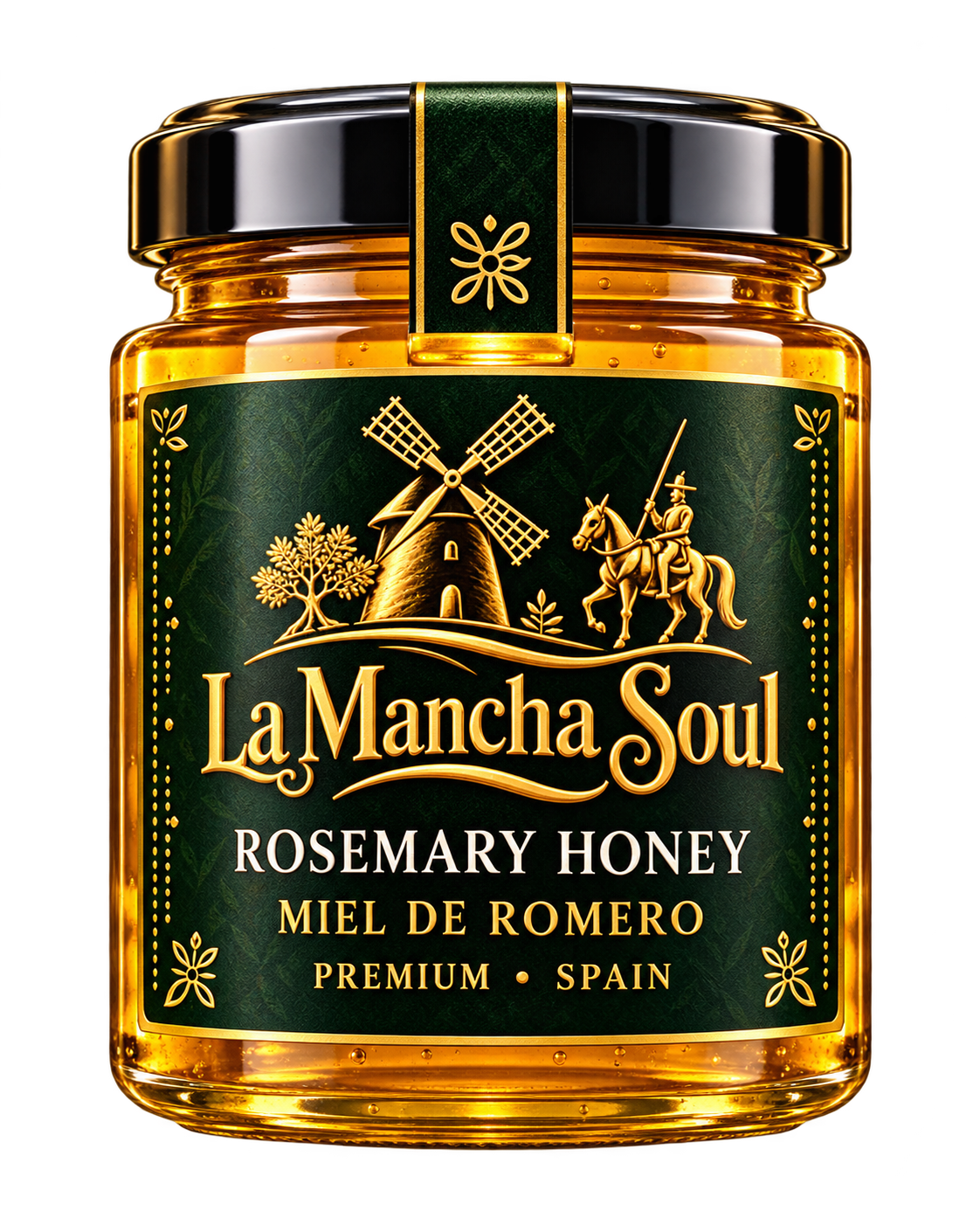
The images do not confirm final packaging or a final commercial product reference.

Packaging visual under review. It does not establish floral source, certification or availability.

Honey — La Mancha Soul

Let's talk about what you need.

Tell us what you'd like to add to your range. We'll send the information you need to decide: a product sheet, sample, catalogue or proposal.

Products of interest